


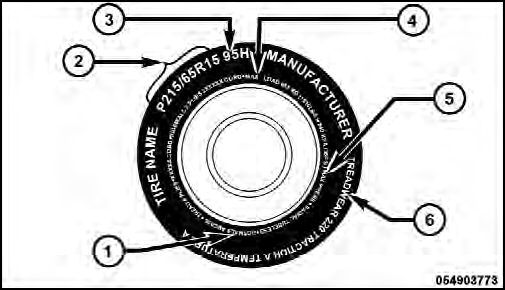
1 — U.S. DOT Safety Standards Code (TIN)
4 — Maximum Load
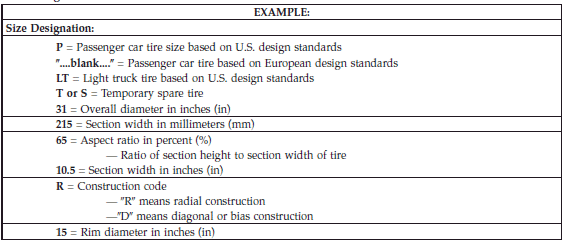
2 — Size Designation
5 — Maximum Pressure
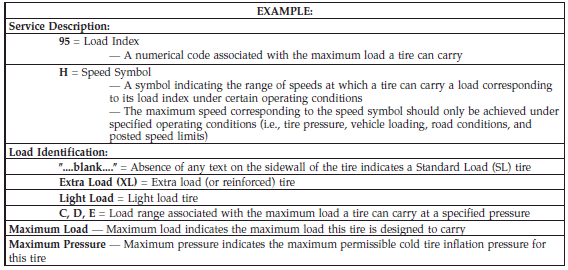
3 — Service Description
6 — Treadwear, Traction and Temperature Grades
 NOTE:
NOTE:
• P (Passenger) - Metric tire sizing is based on U.S.
design standards. P-Metric tires have the letter “P” molded into the sidewall preceding the size designation.
Example: P215/65R15 95H.
• European-Metric tire sizing is based on European design standards. Tires designed to this standard have the tire size molded into the sidewall beginning with the section width. The letter P is absent from this tire size designation. Example: 215/65R15 96H.
• LT (Light Truck) - Metric tire sizing is based on U.S.
design standards. The size designation for LT-Metric tires is the same as for P-Metric tires except for the letters “LT” that are molded into the sidewall preceding the size designation. Example: LT235/85R16.
• Temporary spare tires are high-pressure compact spares designed for temporary emergency use only.
Tires designed to this standard have the letter “T” or “S”molded into the sidewall preceding the size designation.
Example: T145/80D18 103M.
• High flotation tire sizing is based on U.S. design standards and it begins with the tire diameter molded into the sidewall. Example: 31x10.5 R15 LT.
Tire Sizing Chart
See also:
ABS
The vehicle can be fitted with an ABS braking system, which prevents the wheels
from locking when braking, makes the most of road grip and gives the best control
when emergency braking under diffi ...
Body Lubrication
Locks and all body pivot points, including such items as seat tracks, door hinge
pivot points and rollers, liftgate, tailgate, sliding doors and hood hinges, should
be lubricated periodically with ...
Headlight slant adjusting device
The car is fitted with electric headlight slant adjusting device working with
ignition key to MAR and dipped beams on.
When the car is loaded, it slopes backwards. This means that the headlight b ...