


The tires on the front and rear of your vehicle operate at different loads and perform different steering, driving, and braking functions. For these reasons, they wear at unequal rates and tend to develop irregular wear patterns.
These effects can be reduced by timely rotation of tires.
The benefits of rotation are especially worthwhile with aggressive tread designs such as those on all season type tires. Rotation will increase tread life, help to maintain mud, snow and wet traction levels, and contribute to a smooth, quiet ride.
Refer to the “Maintenance Schedule” for the proper maintenance intervals. More frequent rotation is permissible if desired. The reasons for any rapid or unusual wear should be corrected prior to rotation being performed.
The suggested rotation method is shown in the following diagram.
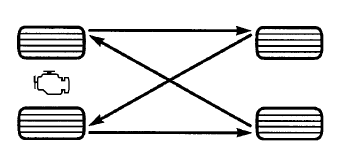
Tire Rotation
See also:
Manual Transmission – If Equipped
Apply the parking brake, place the shift lever in NEUTRAL, and press the clutch
pedal before starting the vehicle. This vehicle is equipped with a clutch interlocking
ignition system. It will not ...
Spare Tire Stowage
Reverse instructions of the spare removal section.
Rotate the jack wrench tool on the winch drive nut clockwise until effort becomes
heavy and an audible click is heard indicating the spare is prop ...
Sunroof
It is controlled electrically and it will only work when the ignition key is
at MAR.
Sunroof is controlled by a switch. When you release it the roof locks in the
position it is at that moment.
...